Top 10 Bar Stools and Chairs for Global Buyers

Choosing the right bar stools and chairs is not a simple style exercise. Global buyers must balance comfort, dimensions, materials, safety, and landed cost. A beautiful stool can still fail when its 30-inch seat height meets a 36-inch counter.

Market context matters. Grand View Research valued the global furniture market at approximately USD 1.1 trillion in 2021 and expects continued growth through 2030. Allied Market Research also projected strong expansion in the worldwide furniture sector through 2031. These reports cover broader furniture categories, not only bar seating. That limitation deserves attention.

This guide, “Top 10 Bar Stools and Chairs for Global Buyers,” focuses on practical buying evidence. Each selection considers seat height, back support, frame stability, upholstery, cleanability, and supplier transparency. A café owner may need wipeable polyurethane, while a hotel buyer may prefer solid wood with replaceable glides. Small details matter.

Furniture designer Ludwig Mies van der Rohe famously said, “A chair is a very difficult object. A skyscraper is almost easier.” His observation remains relevant. Seating must support the body, survive repeated movement, and fit the room visually. It should also arrive with accurate specifications and dependable packaging.

No ranking is perfect. Buyer priorities differ across regions.

Our comparisons therefore avoid pretending that one model suits everyone. We examine where each product performs well, where it may disappoint, and which purchasing conditions influence the final decision. The result is a practical starting point for importers, hospitality groups, retailers, and homeowners seeking reliable bar stools and chairs for international projects.
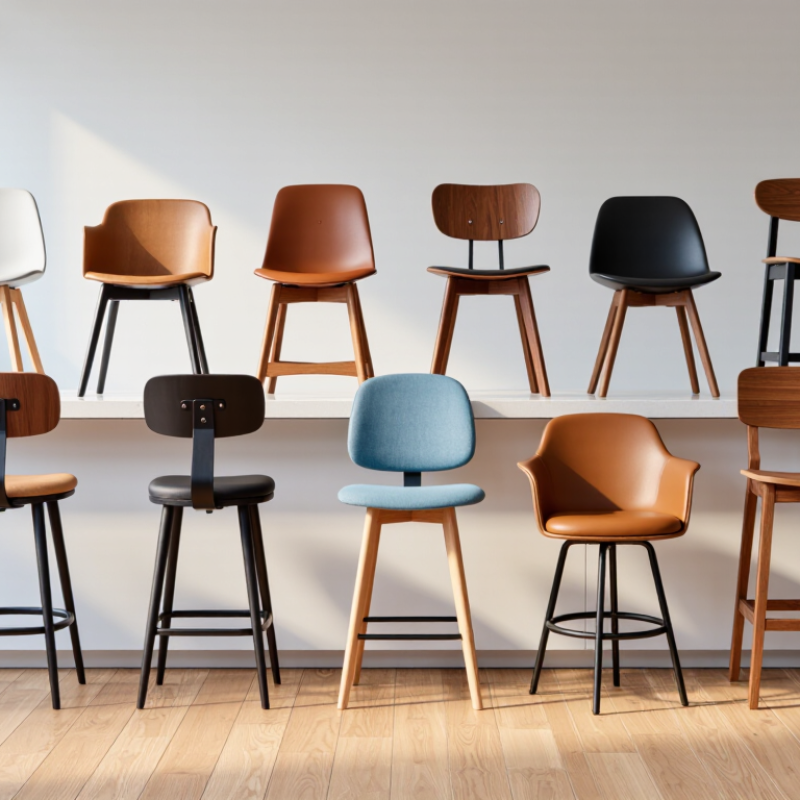
Top 10 Bar Stools and Chairs for Global Buyers

What Makes a Bar Stool or Chair Suitable for Global Buyers

Top 10 Bar Stools and Chairs for Global Buyers

What Makes a Bar Stool or Chair Suitable for Global Buyers

Global buyers judge a bar stool by more than its appearance. A suitable model must match counter height, user habits, climate, shipping limits, and safety expectations. The common 30-inch counter is not universal. Some hospitality projects use counters near 36 inches. Measure twice. UNCTAD’s Review of Maritime Transport 2024 states that over 80% of global merchandise trade moves by sea. Knock-down frames and compact cartons can therefore reduce freight space and handling damage.

Seat comfort also requires practical testing. A footrest should support both feet without pressing the ankles. A rounded front edge can reduce pressure behind the knees. Buyers should request load, stability, and durability reports before placing large orders. EN 16139 covers non-domestic seating performance, including strength and durability testing. Local requirements may differ. Do not assume one certificate works everywhere. I have seen attractive stools fail because their foot rings loosened after repeated commercial use.

Material selection affects maintenance and environmental impact. The Global Resources Outlook 2024 reports that worldwide resource extraction has tripled over the past five decades. Durable steel, responsibly sourced timber, and replaceable upholstery can extend product life. Powder-coated surfaces usually tolerate frequent cleaning better than fragile finishes, but salt air still demands careful coating selection. Packaging should resist humidity and stacking pressure. A supplier should provide carton tests, moisture protection details, spare-part plans, and clear assembly instructions. Finish samples help. Digital images often hide texture, gloss, and color differences.

Top 10 Bar Stools and Chairs for Global Buyers

Global Buyer Suitability Index based on five practical purchasing factors: height flexibility, durability, shipping efficiency, easy maintenance, and seating comfort. Scores are editorial benchmarks for generic product types and do not represent any company or brand.

Higher scores indicate a stronger balance of adaptability, long-term use, logistics practicality, cleaning convenience, and comfort across international markets.

Key Types and Designs Among the Top 10 Bar Seating Options

Global buyers assessing the top 10 bar stools and chairs should compare function before appearance. The main options include backless stools, low-back stools, high-back chairs, swivel stools, fixed stools, counter-height seats, bar-height seats, upholstered models, wooden designs, and industrial metal frames. Each type serves a different setting. Backless stools save space under narrow counters. High-back chairs support longer dining sessions. Swivel seats improve movement, but their mechanisms need stronger maintenance.

Grand View Research valued the global furniture market at about USD 652.4 billion in 2023 and forecasts a 5.2% compound annual growth rate through 2030. This wider trend supports demand for adaptable seating, especially in compact homes and hospitality interiors. Design professionals often recommend matching seat height with counter height. A 60–66 centimetre seat generally suits kitchen counters, while a 74–81 centimetre seat fits standard bar surfaces. Small errors here create uncomfortable knee angles.

Material choice also shapes durability and perception. Solid wood adds warmth, while powder-coated steel offers a sharper commercial character. Upholstery improves comfort, yet fabric can absorb spills and odors. The Business Research Company’s 2024 furniture report highlights customization and multifunctional design as important market drivers. That makes adjustable-height stools attractive for mixed-use spaces. Still, adjustment parts can loosen over time. Buyers should check load ratings, footrest strength, weld quality, and relevant commercial seating standards such as BIFMA performance requirements. A beautiful stool is not always a reliable chair.

How to Compare Materials, Comfort, Size, and Durability

Top 10 Bar Stools and Chairs for Global Buyers

Choosing bar stools for international projects requires more than attractive photos. Compare the frame, seat material, dimensions, and construction details together. Solid wood offers warmth, but humidity changes may cause movement or cracking. Powder-coated steel resists heavy use, while aluminum is lighter and easier to handle. Molded plastic can simplify cleaning, although cheaper grades may become brittle under sunlight. Upholstered seats feel softer, but fabric needs careful testing for stains, abrasion, and color fading.

Comfort depends strongly on measurements. Keep about 25 to 30 centimeters between the seat and the counter underside. A stable footrest reduces pressure on the legs. Check seat width, back height, edge softness, and overall balance. A stool can look comfortable and still feel hard after twenty minutes. Test several users, including taller and shorter adults. Small differences matter.

Durability claims should be supported by clear test records, not vague phrases such as “commercial quality.” Ask about load testing, weld inspection, coating adhesion, moisture resistance, and replacement parts. Review packaging as well; damaged corners create hidden costs during international shipping. I would not judge a chair from one sample alone. Production batches can vary. Even a careful comparison may miss long-term issues, so request samples, inspect joints by hand, and record measurements before placing a large order.

Important Standards, Packaging, and Shipping Factors for International Buyers

Top 10 Bar Stools and Chairs for Global Buyers

For international sourcing, the best ten bar stools and chairs should be judged beyond appearance. Check seat height, footrest strength, backrest stability, and long-term fatigue performance. ANSI/BIFMA X5.1 includes a 275-pound static load test for certain chair components. EN 12520 also defines strength, stability, and durability requirements for domestic seating. These standards are useful references, but they do not replace buyer-specific testing. A coastal hotel may need stronger corrosion protection than a dry apartment project. That detail is often missed.

Packaging deserves equal attention. Request carton dimensions, gross weight, pallet plans, and drop-test records before placing an order. ISTA 3A evaluates hazards such as shock, vibration, and compression during parcel distribution. Use corner guards, protective sleeves, and separated metal parts to prevent scratches. A single crushed carton can damage several finished surfaces. I have seen attractive samples arrive safely, while bulk shipments failed because the packaging was never tested at full weight.

Shipping choices affect both cost and reliability. UNCTAD’s Review of Maritime Transport reports that more than 80% of global merchandise trade by volume moves by sea. Therefore, stackability and container utilization matter. Confirm whether stools nest, fold, or require fixed spacing. Ask for moisture barriers when sea transit is long. The World Bank’s 2023 Logistics Performance Index also shows major differences in customs and delivery performance between markets. Build buffer time into purchase plans. Perfect forecasts are rare. Recheck them.

Top 10 Bar Stools and Chairs for Global Buyers – Important Standards, Packaging, and Shipping Factors for International Buyers
No. Product Type Recommended Use Seat Height Overall Size
(W × D × H)
Typical Net Weight Main Materials Key International Standards or Requirements Typical Carton Size
(W × D × H)
Carton CBM Packaging Recommendation Shipping and Buyer Checkpoints
1 Fixed Wooden Counter Stool Residential kitchens, cafés, breakfast counters 610–660 mm 430 × 480 × 850–950 mm 5–8 kg Solid wood frame, plywood or upholstered seat, metal footrest EN 12520 for domestic seating; EN 1022 stability; REACH chemical requirements where applicable 520 × 500 × 950 mm
1 piece/carton
0.247 m³ Foam corner protection, abrasion-resistant bag, double-wall carton, separate protection for footrest Confirm moisture content of wood, kiln-drying records, carton compression strength, and destination-market fire-label requirements
2 Adjustable Gas-Lift Bar Stool Home bars, restaurants, flexible-height counters 560–810 mm 460 × 500 × 870–1,080 mm 8–12 kg Steel base, gas-lift cylinder, molded foam, PU or textile cover EN 12520 or EN 16139 according to use; stability and durability testing; applicable cylinder safety requirements 560 × 520 × 450 mm
1 piece/carton
0.131 m³ Disassemble base and cylinder where possible; use molded pulp or EPE inserts; protect the lift lever from impact Check packed-cylinder restrictions, maximum user load, cycle-test results, corrosion resistance, and spare-part availability
3 Upholstered Swivel Bar Chair Restaurants, lounges, hospitality interiors 660–760 mm 500 × 540 × 1,000–1,120 mm 9–14 kg Steel or wood frame, molded foam, fabric or synthetic leather, swivel plate EN 16139 for non-domestic seating; EN 1022 stability; upholstery flammability testing as required by destination 620 × 570 × 780 mm
1 piece/carton
0.276 m³ Use a breathable dust cover, reinforced seat corners, foam blocking around the swivel mechanism, and a five-layer carton Measure compressed carton height, inspect swivel torque, verify seam strength, and confirm textile composition and labeling
4 Stackable Metal Bar Stool Commercial dining, events, cafés, outdoor covered areas 650–760 mm 450 × 500 × 950–1,050 mm 5–8 kg Powder-coated steel or aluminum, molded plastic or wood seat EN 16139 for non-domestic use; EN 1022 stability; ISO 7173 strength and durability principles may support testing 520 × 520 × 1,050 mm
2–4 pieces/carton
0.284 m³ Stack with protective separators, cap exposed feet, use edge guards, and reinforce the carton base Compare nested shipping height, stacking limit, coating thickness, salt-spray performance, and maximum carton gross weight
5 Backless Saddle Bar Stool Kitchen islands, compact cafés, casual dining 610–760 mm 380–450 × 380–450 × 610–760 mm 3–6 kg Solid wood or steel base, molded seat, PU, vinyl, or wood surface EN 12520 for domestic use or EN 16139 for commercial use; stability and load testing 470 × 470 × 780 mm
1 piece/carton
0.172 m³ Use die-cut cardboard supports, foam around the seat edge, sealed hardware bags, and moisture-resistant carton liners Verify seat-edge durability, floor-protection pads, stackability, carton drop-test performance, and installation instructions
6 Industrial-Style Steel Bar Chair Restaurants, breweries, cafés, retail interiors 650–760 mm 430 × 470 × 950–1,050 mm 6–10 kg Welded steel tube, powder coating, wood or metal seat EN 16139 for commercial seating; EN 1022 stability; coating and chemical compliance requirements for the target market 540 × 520 × 1,080 mm
2 pieces/carton
0.303 m³ Individual polybags, foam between frames, protected weld points, and high-strength corner reinforcement Check weld inspection, coating adhesion, carton puncture resistance, nested quantity, and rust protection during sea transit
7 Rattan or Woven-Seat Bar Stool Residential, resort, coastal, and hospitality projects 650–760 mm 460 × 500 × 980–1,080 mm 5–9 kg Solid wood or metal frame, natural rattan, synthetic wicker, or woven cord EN 12520 or EN 16139 according to application; material and surface-treatment requirements vary by market 560 × 540 × 1,100 mm
1 piece/carton
0.333 m³ Use breathable inner packaging, moisture absorbers where appropriate, molded corner blocks, and anti-crush top protection Confirm humidity control, pest-treatment documentation for plant materials, colorfastness, and protection against deformation
8 Plastic or Molded-Polymer Bar Stool Indoor dining, patios, commercial quick-service areas 650–760 mm 450 × 500 × 950–1,050 mm 4–7 kg Polypropylene, fiberglass-reinforced polymer, aluminum, or steel legs EN 16139 for commercial use; EN 1022 stability; UV and weathering tests for outdoor applications 520 × 520 × 1,100 mm
2 pieces/carton
0.297 m³ Nested units with nonwoven separators, reinforced carton corners, and protection against surface scuffing Check resin identification, recycled-content declaration if claimed, UV performance, nesting tolerance, and dimensional consistency
9 Counter-Height Dining Chair Residential dining counters, cafés, co-working kitchens 560–660 mm 470 × 520 × 850–980 mm 6–10 kg Wood or steel frame, upholstered or molded seat, backrest, footrest EN 12520 for domestic seating; EN 1022 stability; EN 16139 when specified for commercial projects 580 × 550 × 980 mm
1 piece/carton
0.312 m³ Use molded pulp or EPE frame supports, protect the backrest, isolate metal hardware, and seal the carton against dust Confirm seat-to-counter height, backrest impact resistance, assembly time, replacement hardware, and flat-pack efficiency
10 Outdoor Aluminum Bar Chair Terraces, hotels, restaurants, poolside areas 650–760 mm 480 × 540 × 980–1,080 mm 4–8 kg Aluminum frame, synthetic mesh or rope, powder coating, plastic glides EN 16139 for commercial seating; EN 1022 stability; ISO 9227 salt-spray testing may be used for corrosion evaluation 560 × 550 × 1,100 mm
2 pieces/carton
0.339 m³ Use foam sleeves on frames, separators between chairs, UV-resistant bags, moisture-resistant cartons, and sealed accessory packs Check salt-spray results, drainage design, UV resistance, outdoor load rating, container humidity protection, and carton stacking limits
Notes: Dimensions, weights, carton sizes, and CBM values are typical planning ranges for international sourcing and should be confirmed against the final product drawings and packaging specification. Carton CBM is calculated as length × width × height in meters. For wood packaging used in international trade, ISPM 15 treatment and marking may be required. Packaging validation can include applicable ISTA procedures, while electrical, chemical, textile, upholstery, and fire-safety requirements should be confirmed for the destination market.

How to Select the Best Bar Stool or Chair for Different Spaces

Selecting the right bar stool starts with the space, not the style. The 2024 Houzz U.S. Kitchen Trends Study reports that 63% of upgraded kitchen islands include seating. Measure the counter first. A 36-inch counter usually needs a 24–26-inch seat. A 42-inch bar works better with a 28–30-inch seat. Leave about 24 inches of width per person. This prevents elbows from colliding during breakfast or casual meetings.

Comfort also depends on movement. Choose a footrest, stable base, and a backrest for longer sitting. For restaurants or shared offices, check commercial-use testing under ANSI/BIFMA seating standards. A woven seat may look warm, but crumbs collect quickly. Smooth, sealed surfaces are easier to maintain in busy spaces. Swivel stools improve access, yet they can distract children or move across polished floors. I have learned that a beautiful stool can still fail when its legs catch on a narrow walkway. Allow at least 30–36 inches behind occupied seating for practical circulation. Measure twice.

For compact apartments, backless stools can slide completely under the counter. For open-plan kitchens, upholstered chairs soften hard stone and metal surfaces. Outdoor buyers should verify UV resistance and drainage, not just water-resistant labels. The 2023 Global Wellness Institute research links comfort and supportive environments with everyday wellbeing, but comfort is personal. A firm seat may suit a café. It may not suit a two-hour home workspace. Test the height, reach, and cleaning routine before ordering large quantities.

Pin It on Pinterest

Share This