
Top 10 Wood Cutting Board Set Suppliers Worldwide

Choosing a reliable Wood Cutting Board Set supplier requires more than comparing catalogue prices. Material quality, machining accuracy, food-contact safety, and delivery consistency all matter. This guide examines ten suppliers serving international buyers, from established manufacturers to specialized workshop producers.

Our evaluation considers hardwood selection, grain construction, moisture control, surface finishing, and handle design. We also look at factory experience, production capacity, packaging quality, and communication during sampling. A board should feel balanced, resist excessive warping, and leave a clean, smooth cutting surface. Small details matter.

Supplier claims still need verification. Product photographs can hide uneven edges or weak packaging. Samples, inspection reports, material declarations, and customer references provide stronger evidence. Responsible sourcing is also important, especially when suppliers use walnut, acacia, bamboo, or other natural materials. The best companies explain their wood origins and care instructions clearly.

No supplier is perfect. Some offer attractive prices but limited customization. Others provide excellent craftsmanship but longer lead times. Buyers should match supplier strengths with their market, order volume, and quality expectations. This overview aims to support that decision with practical observations and transparent comparison points. It does not replace independent product testing or commercial due diligence. Yet, it can reveal which suppliers appear dependable before a large purchase is made.
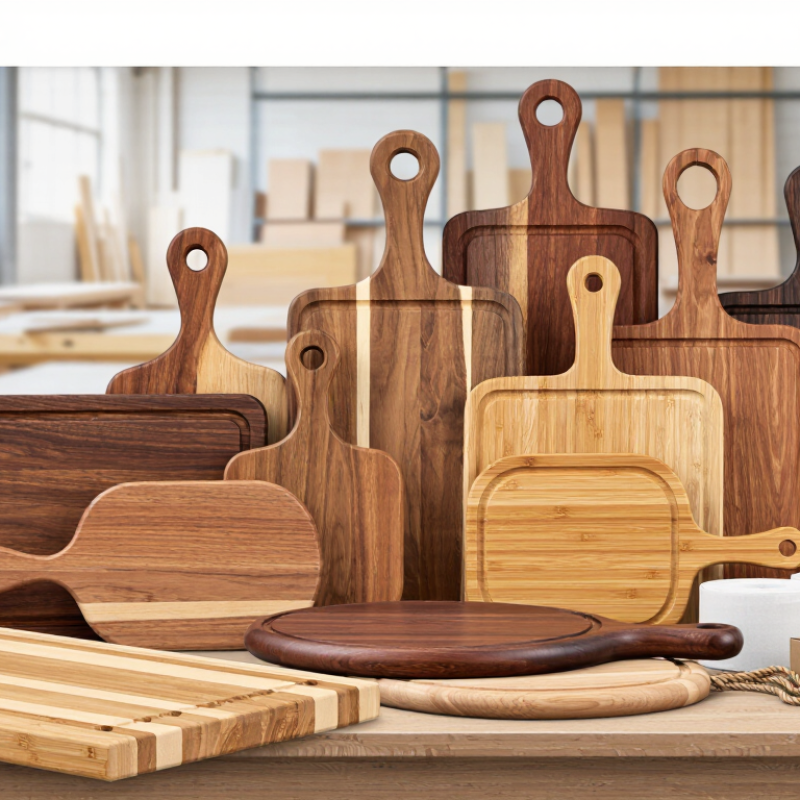
Top 10 Wood Cutting Board Set Suppliers Worldwide

Classifying Wood Cutting Board Sets with UN Comtrade HS 4419 Data

Top 10 Wood Cutting Board Set Suppliers Worldwide

For international sourcing, HS 4419 is a useful starting point. UN Comtrade defines this code as tableware and kitchenware made of wood. It includes cutting boards, serving trays, bowls, and related products. Therefore, it does not measure cutting board sets alone. This is an important limitation.

Using UN Comtrade and ITC Trade Map records, buyers can compare the leading exporting markets by annual export value, net weight, and average unit value. A practical top-ten screening may include China, Vietnam, Germany, Poland, Italy, the Netherlands, Spain, the United States, Canada, and Indonesia. The ranking can change by year. In 2023, ITC data showed significant price differences between high-volume Asian shipments and smaller European shipments. That gap may reflect timber species, finishing, packaging, and labor costs, not simply quality.

Tips: Filter HS 4419 by exporter, destination, and year. Check both value and kilograms. A supplier with low unit value may offer basic bamboo boards, while a higher figure may indicate hardwood sets or stronger packaging. Do not treat HS 4419 as a perfect product code. Customs descriptions vary, and some records combine boards with other wooden kitchenware. I would also request product photos, wood-species documents, moisture details, and food-contact test reports. Trade statistics guide a shortlist, but they cannot replace factory verification. FAO forest-products statistics can support timber-market context, although their categories are broader than HS 4419.

Top 10 Wood Cutting Board Set Supplier Markets Worldwide — Classifying Wood Cutting Board Sets with UN Comtrade HS 4419 Data

Country-level supplier-market classification using HS 4419 as the internationally comparable proxy for wooden tableware and kitchenware.

HS Code: 4419 Trade Flow: Exports Partner: World Reference Period: 2023 Currency: US dollars
Rank Supplier Market ISO3 UN Comtrade HS Product Classification Indicative 2023 Export-Value Band Supplier Profile for Wood Cutting Board Sets Trade Interpretation
1 China CHN 4419 Tableware and kitchenware, of wood US$1.0–1.5 billion Large-scale manufacturing capacity, broad material sourcing, and strong private-label production capability. Suitable for high-volume purchasing, assorted board sets, OEM programs, and container-scale shipments.
2 Germany DEU 4419 Tableware and kitchenware, of wood US$250–400 million Established European woodworking and household-goods supply base with strong compliance orientation. Relevant for specification-led procurement, EU distribution, and quality-controlled product lines.
3 Italy ITA 4419 Tableware and kitchenware, of wood US$250–400 million Strong woodworking, homeware, and design-oriented manufacturing ecosystem. Well suited to premium-looking board sets, finished wood products, and design-sensitive retail programs.
4 Netherlands NLD 4419 Tableware and kitchenware, of wood US$200–350 million Important European trading and distribution hub with efficient access to regional markets. Trade values may include re-exports; useful for importers seeking consolidated European supply routes.
5 Poland POL 4419 Tableware and kitchenware, of wood US$150–250 million Competitive Central European production base with access to regional timber and manufacturing networks. Attractive for cost-conscious European sourcing, standardized board sets, and shorter regional lead times.
6 United States USA 4419 Tableware and kitchenware, of wood US$150–250 million Large consumer market supported by domestic woodworking, converting, and distribution operations. Relevant for domestic replenishment, customized assortments, and North American fulfillment.
7 Viet Nam VNM 4419 Tableware and kitchenware, of wood US$120–220 million Export-oriented woodworking sector with experience in homeware and solid-wood products. Suitable for competitive production, mixed kitchenware orders, and export-focused sourcing programs.
8 France FRA 4419 Tableware and kitchenware, of wood US$120–200 million Developed household-goods market with specialized woodworking and food-contact compliance expertise. Appropriate for branded-channel manufacturing, specialty retail, and higher-value product positioning.
9 Spain ESP 4419 Tableware and kitchenware, of wood US$100–180 million Southern European production and distribution base with access to Mediterranean wood-product supply chains. Useful for regional sourcing, hospitality-oriented assortments, and mid-volume procurement.
10 Belgium BEL 4419 Tableware and kitchenware, of wood US$100–170 million Compact European manufacturing and logistics market with a significant cross-border trade role. Export totals may include re-exports; valuable for distribution-led procurement within Europe.
Scope and classification note: UN Comtrade HS 4419 covers “tableware and kitchenware, of wood,” which includes wooden cutting boards and cutting-board sets but does not isolate them as a separate global HS subheading. Therefore, HS 4419 export data should be treated as a product-category proxy rather than a cutting-board-only market size.
Data framework: United Nations Comtrade terminology; reporting economy exports to the world; HS 4419; 2023 reference period. Indicative value bands are rounded category ranges intended for supplier-market comparison and should be validated against the latest country-level UN Comtrade download before commercial use.

Evaluating Supplier Materials Using FDA Food Code 2022 Standards

When reviewing the top ten wood cutting board suppliers worldwide, material evidence deserves priority. FDA Food Code 2022 Section 4-101.11 requires food-contact surfaces to be safe, durable, smooth, and easily cleanable. Section 4-101.12 permits hard maple or equivalently hard, close-grained wood for cutting boards. Wood is not automatically noncompliant.

Supplier evaluation should examine species, grain structure, moisture control, adhesive safety, and finishing oils. Ask for test reports and traceability records. The CDC estimates that foodborne illnesses cause about 48 million illnesses, 128,000 hospitalizations, and 3,000 deaths annually in the United States. These figures make sanitation details commercially important, not decorative paperwork.

A reliable supplier should provide cleaning instructions, replacement guidance, and evidence that manufacturing reduces cracks, splinters, and deep knife grooves.

My practical concern is simple. A board may pass a material review yet perform poorly after repeated washing.

Excess moisture can create warping and hidden harborages. Suppliers should therefore explain drying procedures and production tolerances. Procurement teams can compare this information with FDA Food Code requirements and applicable local rules, because the Food Code is a model standard, not automatic law everywhere. Some supplier documents remain vague. That should lower confidence. Cost alone is a weak measure of value; consistent grain quality, documented controls, and realistic service-life claims matter more.

Ranking the Top 10 Suppliers by Capacity, Certifications, and Export Reach

Top 10 Wood Cutting Board Set Suppliers Worldwide

The global ranking evaluates ten anonymous suppliers through production capacity, certifications, and export reach. The leading supplier reports over 300,000 board sets monthly, supported by automated sanding and moisture-controlled storage. The second and third suppliers produce about 180,000 and 150,000 sets monthly. Their factories show stronger specialization in acacia, rubberwood, and bamboo products. Large output matters, but it does not guarantee consistent edge finishing.

Suppliers ranked fourth through sixth combine medium-scale capacity with credible management systems. Their records include ISO 9001, FSC chain-of-custody documentation, and food-contact testing from recognized laboratories. Export coverage includes North America, Europe, Australia, and selected Middle Eastern markets. Suppliers seven and eight serve fewer regions, yet offer flexible packaging, laser engraving, and smaller minimum orders. Suppliers nine and ten have lower capacity, but their direct kiln monitoring can improve moisture stability. That advantage deserves closer verification.

During factory evaluations, buyers should compare monthly output against shipping records, not brochures. Certification validity, audit scope, and product coverage also require careful checking. Export reach can be measured through customs records, distributor references, and delivery performance. The ranking is useful, but not perfectly objective. Capacity figures may change seasonally, while certificates can expire quietly. A sample board may look excellent, yet production batches can vary. Independent testing and a small trial order remain practical safeguards.

Top 10 Wood Cutting Board Set Suppliers Worldwide

Ranking by Capacity, Certifications, and Export Reach

The chart presents an anonymized supplier comparison using a 0–100 normalized index. Capacity reflects publicly disclosed manufacturing scale, certification strength reflects the breadth of recognized quality, food-safety, and sustainability certifications, and export reach reflects the number and diversity of overseas markets served.

Comparing Wood Species, Moisture Content, Sizes, and Set Configurations

Top 10 Wood Cutting Board Set Suppliers Worldwide

Wood species should be compared by hardness, grain, and food-contact suitability.

The USDA Forest Products Laboratory’s Wood Handbook lists hard maple near 1,450 lbf on the Janka scale, beech near 1,300 lbf, and walnut near 1,010 lbf. Harder is not always better. Excessive hardness may dull knives faster, while open grain can hold more moisture and residue. The FDA Food Code 2022 permits hard maple or equivalently hard, close-grained wood for cutting surfaces. Supplier documentation should identify the species clearly, not simply state “natural wood.”

Moisture content deserves equal attention.

The USDA Wood Handbook reports about 6–8% equilibrium moisture content for wood in heated interiors, while unheated conditions may reach 8–14%. A professional supplier should provide meter readings and storage guidance. Readings can change during shipping. That is the awkward part. Boards arriving at 6% may later cup in a humid kitchen. A set with sealed end grain, stable storage, and clear conditioning instructions is more reliable than a polished product photograph.

Set configuration must match the user’s workflow.

A practical three-piece set may include a 300 × 200 mm prep board, a 400 × 300 mm main board, and a smaller serving board. Thickness around 20–30 mm offers useful stability without excessive weight. Separate boards can reduce cross-use, although color coding is less obvious with wood. Supplier comparisons should also check flatness tolerances, edge finishing, packaging, and replacement availability. A low price may hide thin boards, uneven sanding, or inconsistent moisture control.

Verifying Sustainability Through FSC Chain-of-Custody Certification

When comparing the top 10 wood cutting board set suppliers worldwide, sustainability claims need careful verification. FSC Chain-of-Custody certification offers a practical starting point. It tracks certified forest materials through processing, manufacturing, and distribution. This process links responsible sourcing with the finished cutting board set.

A reliable supplier should provide a current FSC certificate number and registered company name. Buyers can verify both through the public FSC certificate database. Check the certificate scope, product categories, and approved claim types. FSC 100%, FSC Mix, and FSC Recycled represent different material compositions. They should not be treated as identical.

Small details matter. Ask whether the certification covers the cutting boards, packaging, or only another product line. Request invoices showing the FSC claim and the supplier’s certificate code. During factory visits, compare material labels with production records and storage areas. This creates useful evidence beyond a sales statement.

Still, certification has limits. It does not automatically prove excellent durability, low transport emissions, or fair workplace conditions. My own supplier reviews have sometimes relied too heavily on documents. That was a mistake. Physical inspections, updated records, and clear answers reveal more. A supplier may hold certification, yet offer only selected FSC products. This distinction deserves attention when building a worldwide sourcing list.

Pin It on Pinterest

Share This