China Top Bamboo Dishes Manufacturers for Wholesale Buyers
Wholesale buyers need more than a low unit price when comparing Bamboo Dishes manufacturers in China. They need consistent dimensions, smooth finishes, dependable production capacity, and clear answers about materials and quality checks. A sample can look excellent under bright showroom lights. Ask to inspect several pieces, including their rims, joins, and undersides. Small differences matter when orders reach thousands of units.
Sourcing consultant Lin Wei puts the challenge this way: “A reliable supplier is measured by repeatable quality, not one flawless sample.” Buyers should ask how factories inspect incoming bamboo, control moisture during production, and handle defects. Request product specifications, production timelines, packaging details, and recent quality records. Confirm which certifications apply to the specific product and market; do not assume every factory or item holds the same credentials. Details count.
Price still matters. But the cheapest quote may exclude protective packaging, inspection, or realistic lead times. Compare like with like, and ask suppliers to explain any unusually low offer. This guide examines China’s Bamboo Dishes manufacturers through practical criteria for wholesale buyers, including product range, customization, communication, and order management. It cannot replace factory audits or independent testing. That limitation matters. A polished catalog is useful, but it is not proof of consistent production. Buyers who verify claims, review samples carefully, and document specifications can make more informed sourcing decisions—and spot weak points before placing a large order.
Understanding Bamboo Dishes and Their Wholesale Applications
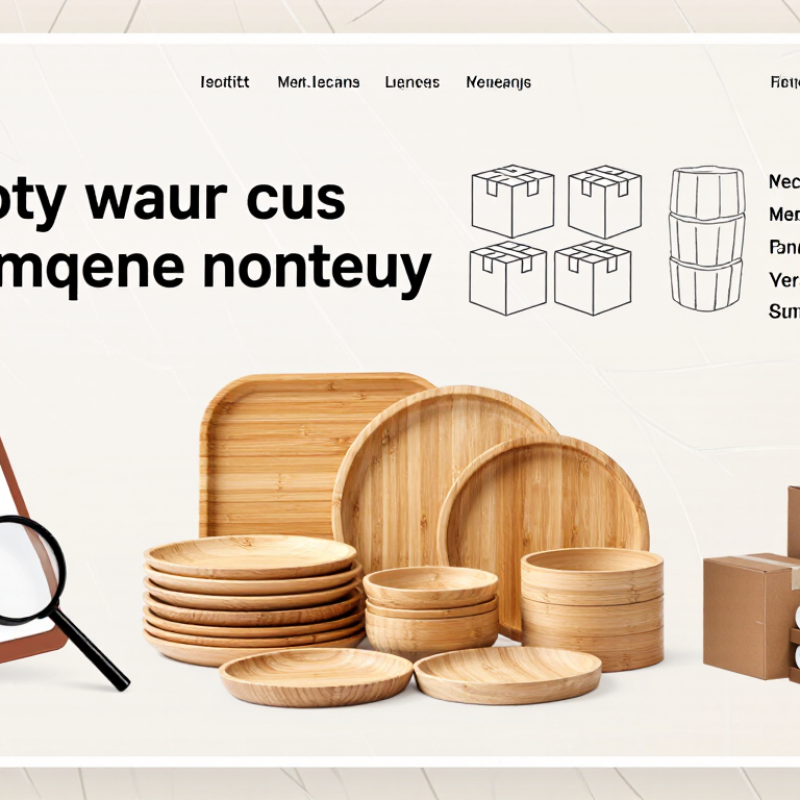
Bamboo dishes are lightweight serving products made from pressed bamboo fiber, laminated strips, or other bamboo-based materials. Wholesale buyers use them for catering, takeaway meals, resorts, outdoor dining, and retail gift sets. Each application has different needs. A caterer may prioritize stackable plates and quick restocking, while a resort may value natural grain and matching bowls. Ask suppliers for dimensions, weight, packing quantities, and clear material specifications before comparing quotations.
Supply claims need careful reading. FAO’s Global Forest Resources Assessment 2020 recorded roughly 35 million hectares of bamboo area across reporting countries. That figure describes a resource, not the sustainability or traceability of any particular dish. That distinction matters. Buyers should request information about the source, manufacturing process, coatings, and food-contact testing. Ask for sample cartons, too; a neat sample can hide chipped edges or inconsistent color in bulk production.
Wholesale planning also depends on performance, not appearance alone. Check whether plates stay rigid under hot, moist foods, and whether bowls fit standard storage racks. For export orders, confirm carton dimensions and pallet loading early, since bulky packaging can raise freight costs. Bamboo is not automatically the best choice for every use. Some molded products contain binders or finishes, so material claims deserve verification. A small trial order can reveal practical issues before a larger commitment.
How Bamboo Dishes Are Made in China
How Bamboo Dishes Are Made in China
Making bamboo dishes in China usually starts with mature bamboo culms selected for straightness and density. Workers remove the outer skin, split the stalks, and cut strips to a consistent width. The strips are boiled or steamed to reduce sugars and moisture, then dried. Drying matters. Uneven moisture can lead to warping later.
For solid bamboo dishes, dried strips are arranged, bonded, and pressed into boards or shaped blanks. The material is trimmed on cutting machines, then sanded through several grades until rims feel smooth. Some products use molded bamboo fiber instead; its fibers are mixed with a binder and pressed in heated molds. These processes are different, so buyers should ask which material a sample contains. The distinction is easy to miss.
Finishing may include polishing and a protective coating suitable for the product’s intended use. Quality checks can cover dimensions, surface cracks, odor, coating consistency, and how pieces handle washing. Good suppliers can explain their material specifications and provide relevant test records, rather than relying on appearance alone. Still, production is not perfectly uniform: bamboo varies naturally, and a polished sample may not reveal every issue in a bulk run. Requesting samples from more than one production batch is a practical check.
Criteria for Evaluating Chinese Bamboo Dish Manufacturers
When evaluating Chinese bamboo dish manufacturers, begin by clarifying the material. A solid bamboo dish and a bamboo-fiber composite dish can differ in weight, finish, and care requirements. Ask for a written material specification, including coatings, adhesives, and intended use. Request samples from the same production process used for wholesale orders. Check rims for splinters, surfaces for rough patches, and dishes for wobbling on a flat table. Small defects matter when customers handle each piece.
Ask how the factory controls moisture, dimensions, and finish consistency. Request recent test reports relevant to your destination market, and confirm that the reports match the exact material and product type. Verify production capacity, minimum order quantity, lead time, carton protection, and batch traceability in writing. Ask for photos or records of in-process checks, not only a final inspection.
Ask for proof.
A polished sample is not a guarantee; production can drift, especially across large batches. Independent inspections may add cost and time, but skipping them can be a poor trade-off. Compare suppliers using the same checklist, then review the terms carefully. No checklist catches every flaw. Keep room for questions, and reassess when specifications change.
Leading China-Based Bamboo Dish Manufacturers for Wholesale Buyers
China-based bamboo dish manufacturers can support wholesale orders with molded plates, shallow bowls, and compartment trays. Buyers should compare production capacity, sample quality, and batch controls—not just unit price. The FAO’s Global Forest Resources Assessment 2020 reported approximately 35 million hectares of bamboo worldwide. That figure describes a broad resource base, not a guarantee of stable supply or finished-product quality. Ask suppliers to explain their bamboo sourcing, material composition, and quality checks in writing.
Inspect samples under practical conditions. Check rim smoothness, plate thickness, surface finish, and whether the foot ring sits flat on a table. Request measurements from several pieces, not one polished sample. Ask how the factory controls moisture and warping during production, and whether packaging protects edges during shipment. Food-contact requirements vary by destination, so buyers should request relevant test reports and verify that they match the exact product and materials. One weak point: documents can look complete while covering a different production batch.
Tips: Put tolerances, carton quantity, inspection criteria, and defect handling into the purchase specification. Keep an approved reference sample. Small details matter. A slight difference in rim height can affect how dishes stack in storage.
Wholesale Ordering, Customization, and Quality Control
Wholesale ordering works best when specifications are clear before production begins. Share the target quantity, delivery window, dish dimensions, and intended use. A 15-centimeter snack plate needs different handling from a deep serving bowl. Ask for the packing count per carton and carton measurements, too. These details help buyers compare shipping plans accurately.
Customization can include shape, surface texture, color, packaging, or a discreet logo. Request a physical sample with the proposed finish, not just a digital image. Check that the rim feels smooth and the dish sits flat on a table. Small details matter. Keep in mind that natural bamboo may show slight variation in grain and tone. A perfectly uniform appearance may be unrealistic, and accepting that can prevent needless rework.
Quality control should cover incoming material, production samples, and finished cartons. Agree on acceptable limits for warping, cracks, rough edges, and visible glue marks before placing the order. Ask for inspection photos and records tied to the production batch. If the dishes are intended for food use, request relevant test documentation for the destination market. A polished sample is not proof of consistent bulk quality. Include a simple carton handling check, since damage can begin before the goods reach your warehouse. Allow room for variation.
