Choosing the best wood furniture is not simply a matter of color, price, or fashion. Buyers must examine wood species, construction, finish, sourcing, and expected use. A dining table facing daily spills needs different qualities from a bedroom chair. Oak offers visible grain and strong wear resistance. Walnut provides rich color, but usually costs more. Rubberwood can be practical, especially when kiln-dried and properly joined.
Professional data supports a careful approach. The Food and Agriculture Organization’s Global Forest Resources Assessment 2020 reports that forests cover approximately 31% of the world’s land area. That figure makes responsible sourcing impossible to ignore. The Forest Stewardship Council’s certified-forest data also shows the growing importance of traceable materials. Meanwhile, CSIL’s World Furniture Outlook 2024 links furniture demand with household income, housing activity, and replacement cycles. These factors influence which wood furniture choices remain realistic for different buyers.
George Nakashima, an influential furniture designer and woodworker, said, “The soul of the tree is in the wood.” His words sound poetic, but they also suggest a practical lesson. Natural variation is not always a defect. Knots, color shifts, and small mineral streaks can prove the material is genuine. Still, buyers should not romanticize every imperfection. Warping, weak joints, peeling veneer, or unclear sourcing deserve careful questions.
The best choice depends on use, budget, maintenance, and personal values. This guide compares solid wood, engineered wood, veneers, and reclaimed options. It also considers durability, repairability, environmental claims, and long-term value. A perfect answer does not exist. A better-informed purchase does.
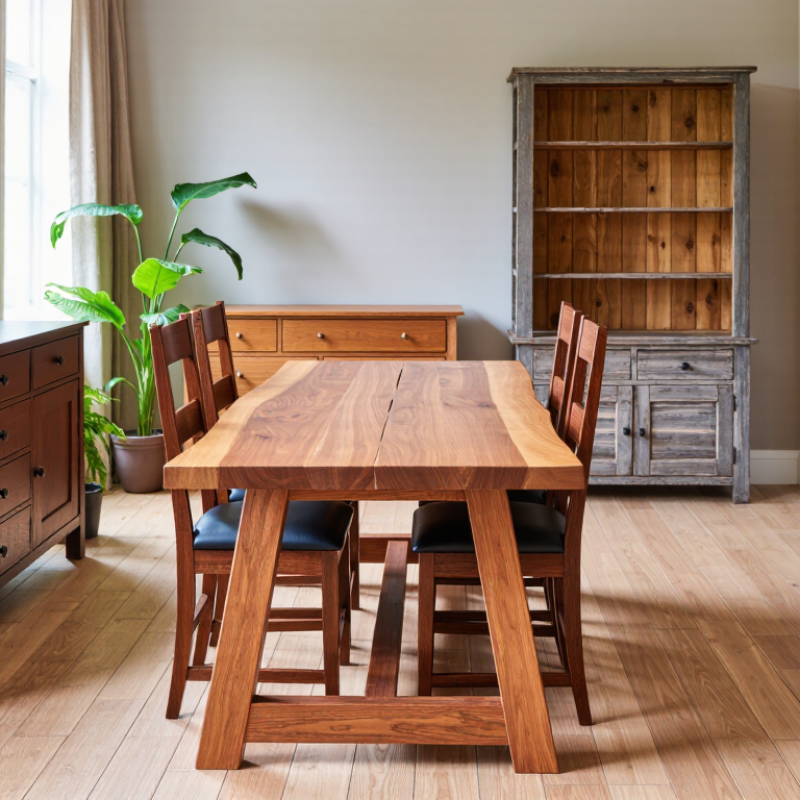
What Is the Best Type of Wood Furniture for Buyers?
The USDA Wood Handbook classifies wood into two botanical groups: hardwoods and softwoods. This system does not simply measure hardness. Hardwoods come from broadleaf trees, while softwoods come from cone-bearing trees. Some softwoods resist dents better than certain hardwoods. That distinction matters.
Oak, maple, and birch are common hardwood choices for tables and cabinets. They often show visible grain, strong surfaces, and reliable wear resistance. Pine, fir, and cedar are softwoods with lighter weight and easier workability. Their surfaces may dent more easily, but that can suit relaxed, rustic interiors. Look closely. A dense species is not automatically the best choice.
The USDA handbook also discusses density, moisture movement, grain, and natural durability. These properties affect how furniture performs after purchase. A buyer should inspect the end grain, joinery, and board stability rather than trust the word “solid.” Veneer can be excellent when bonded to a stable core, while poorly made panels may swell near spills. Check the edges and underside.
I would also ask where the furniture will live. Dry heating can shrink wood, while damp rooms can encourage movement. A moisture meter offers useful evidence, but readings need local interpretation. My earlier assumption that heavy furniture was always stronger proved too simple. Weight helps, sometimes. Construction decides more. Some buyers may prefer visible knots and small color changes, even when they signal a less uniform appearance.
What Is the Best Type of Wood Furniture for Buyers?
Janka hardness data offers a practical way to compare oak, maple, and pine furniture. The test measures the force needed to press a steel ball into the wood. Higher numbers usually suggest better resistance to dents. Hard maple scores about 1,450 lbf, while red oak reaches roughly 1,290 lbf. Eastern white pine is much softer, near 380 lbf. That difference matters around dining chairs, table edges, and busy family rooms. In real furniture inspections, I look beyond hardness. Joinery, moisture control, and finish quality also affect service life. A hard surface can still fail when construction is careless.
Tips: Choose maple for heavy daily use and crisp, smooth surfaces. Select oak when you want strength, visible grain, and easier repair. Pine suits lighter use and tighter budgets, but it may show marks quickly. Test a sample when possible. Touch matters.
Hardness is not a perfect durability forecast. Pine can last for years in a protected bedroom, while poorly dried maple may warp. Oak also varies by species and growing conditions. I once treated hardness as the deciding factor, but that view was too narrow. Furniture needs a balanced assessment. Consider weight, humidity, maintenance, and how often the piece will move. Small scratches are not always defects. They can reveal real use.
| Wood Type | Janka Hardness (lbf) |
Relative Dent Resistance | Typical Durability for Furniture | Natural Decay Resistance | Workability | Best Furniture Applications | Buyer Recommendation |
|---|---|---|---|---|---|---|---|
| Hard Maple | 1,450 | ★★★★★ Very high |
Excellent resistance to dents and surface wear when properly finished. | Low; best suited to dry indoor environments. | Good, although its high hardness can make cutting and machining more demanding. | Dining tables, worktops, desks, cabinets, and high-use flooring. | Best for maximum indoor wear resistance. |
| White Oak | 1,360 | ★★★★☆ High |
Very good structural strength and resistance to everyday furniture wear. | Moderate to high in heartwood; generally more moisture-tolerant than red oak. | Good; commonly used for solid furniture and joinery. | Dining tables, chairs, cabinets, beds, and premium general furniture. | Best all-around choice for strength, durability, and versatility. |
| Red Oak | 1,290 | ★★★★☆ High |
Strong and durable for most indoor furniture applications. | Low; should be protected from prolonged moisture exposure. | Good; machines, sands, stains, and finishes well. | Tables, chairs, dressers, cabinets, and traditional-style furniture. | A durable value option for indoor furniture with a prominent grain pattern. |
| Soft Maple | 950 | ★★★☆☆ Moderate |
Moderate durability; suitable for normal household use with a protective finish. | Low; intended primarily for interior applications. | Good; generally easier to work than hard maple. | Cabinet parts, bedroom furniture, tables, painted furniture, and trim. | A balanced choice when workability and cost matter more than maximum hardness. |
| Eastern White Pine | 380 | ★☆☆☆☆ Low |
More susceptible to dents, scratches, and compression marks. | Low to moderate; indoor use and a protective finish are recommended. | Excellent; lightweight, easy to cut, sand, and finish. | Bookcases, farmhouse tables, chests, shelving, and painted furniture. | Best for budget-friendly, lightweight, or rustic furniture rather than heavy wear. |
| Southern Yellow Pine | 870 | ★★★☆☆ Moderate |
Stronger and harder than white pine, but may still show dents under heavy use. | Variable; heartwood can provide moderate resistance, while untreated sapwood is less resistant. | Good; resin content may affect staining and finishing. | Benches, utility tables, shelving, workshop furniture, and rustic designs. | A practical choice when strength and affordability are priorities. |
How to read the data: Janka hardness measures the force required to embed a standard steel ball halfway into wood. Higher values generally indicate better resistance to dents and surface wear. The listed values are typical species averages in pounds-force (lbf); actual hardness can vary with species, growing conditions, moisture content, and the specific board.
For furniture buyers, the “best” wood depends less on species names than on moisture stability. The USDA Forest Products Laboratory’s Wood Handbook (FPL-GTR-190) links wood behavior to equilibrium moisture content, or EMC. At 20°C, wood reaches roughly 6% EMC at 30% relative humidity, 9% at 50%, and 16% at 80%. These numbers matter. A dining table beside a radiator may lose moisture, shrink across the grain, and open a joint. A damp room can create the opposite stress. Small details matter.
Ask how the lumber was dried and stored. Kiln-dried boards should be acclimated near the home’s indoor conditions before assembly. Narrow boards often move less visibly than wide slabs. Quarter-sawn construction can also reduce cupping, although it does not eliminate movement. The USDA report explains that dimensional change is much greater across the grain than along it. A moisture-meter reading helps, but it is only a snapshot. I would measure several areas, including the underside. That step is easy to skip. It should not be. In practice, stable furniture combines suitable grain orientation, controlled drying, careful joinery, and realistic indoor humidity. A perfectly dry showroom is not a normal home.
When choosing indoor wood furniture, look beyond grain, color, and joinery. The hidden question is formaldehyde exposure from composite wood panels. Many cabinets, desks, and bookshelves use hardwood plywood, medium-density fiberboard, or particleboard. These materials can release formaldehyde indoors, especially in warm, poorly ventilated rooms.
EPA TSCA Title VI sets emission limits for regulated composite wood products sold in the United States. The limits are 0.05 ppm for hardwood plywood, 0.11 ppm for MDF, 0.13 ppm for thin MDF, and 0.09 ppm for particleboard. Buyers should look for a compliance statement or ask the seller for supporting documentation. A label can help, but it is not proof of every construction detail. Finished furniture may not require its own certification label, yet its composite panels should comply with the rule.
I once noticed a strong “new furniture” smell in a small room. That smell was not a reliable safety test. Odor can fade while emissions continue. Open windows, unpack furniture away from sleeping areas, and allow fresh air to circulate. Solid wood often reduces composite-panel content, but finishes, adhesives, and hidden components still deserve attention. I would also check panel edges, drawer bottoms, and backboards. These overlooked parts may contain more engineered wood than the visible frame. Ask precise questions. Keep the paperwork. Then reconsider the purchase if the seller cannot explain the materials or compliance basis.
What Is the Best Type of Wood Furniture for Buyers?
The best wood furniture balances durability, price, and responsible sourcing. Solid wood can last for decades, but it often costs more and uses more material. Engineered wood can reduce cost and improve stability, especially in humid rooms. However, buyers should inspect its surface, edge treatment, and repair options. A beautiful table is not automatically a sustainable table.
FSC Chain-of-Custody data offers stronger evidence than vague “eco-friendly” claims. The system tracks certified material from forest, through sawmills and factories, to the finished product. FSC’s Facts & Figures reporting has recorded more than 160 million certified forest hectares globally, alongside tens of thousands of Chain-of-Custody certificates. These figures show scale, not perfection. Ask sellers for the certificate code and verify the product claim. A logo without traceable documentation proves little.
The FAO Global Forest Resources Assessment 2020 reported that global forest loss slowed during 2010–2020, yet millions of hectares still disappeared each year. That makes material efficiency relevant. Choose furniture with durable joinery, replaceable parts, and a clear certified-material statement. Check the percentage of certified content, too. Mixed materials can confuse buyers. I have found that the cheapest option often hides future costs, such as peeling veneers or difficult repairs. Still, FSC certification does not guarantee craftsmanship, safety, or long service life. That limitation deserves more attention.
The chart compares the minimum qualifying material input associated with common FSC product claims. FSC 100% requires all virgin wood to come from FSC-certified forests, FSC Mix can use a minimum 70% FSC-certified and/or recycled input under the percentage system, and FSC Recycled uses 100% reclaimed material.
For buyers balancing cost and sustainability, FSC Mix may offer a practical middle ground, while FSC 100% and FSC Recycled provide stronger sourcing claims. Certification indicates material traceability, not furniture durability, design quality, or retail price.