2026 Top Battery Powered Pool Vacuum Types for Buyers
Choosing the right Battery Powered Pool Vacuum in 2026 is less about chasing the newest model. It is about matching real cleaning conditions with dependable equipment. A small above-ground pool may need a lightweight robot for fine dust. A larger concrete pool may demand stronger suction, wider brushes, and longer runtime. Leaves, sand, pet hair, and sharp tile edges each create different demands.
Pool-industry educator Rudy Stankowitz offers a useful principle: “Choose the cleaner that fits your pool, not the one with the longest feature list.” That advice deserves attention. Battery capacity can look impressive on a product page, yet water temperature, debris volume, filter condition, and pool shape can reduce actual performance. Some models clean steps well but struggle along curved walls. Others move quickly but leave fine sediment behind.
This guide compares the main Battery Powered Pool Vacuum types expected to matter in 2026. It considers robotic cleaners, handheld units, cordless skimmers, and hybrid designs. The evaluation focuses on cleaning coverage, battery life, charging time, filtration, navigation, maintenance, and value. Practical details matter here. A cleaner that lifts a wet leaf basket easily may save more time than one with a brighter display.
No model is perfect. That part is easy to forget. Buyer reviews can also be inconsistent because pools differ so widely. We will therefore separate measurable specifications from everyday observations, while recognizing where evidence remains limited. The goal is simple: help buyers choose a vacuum that performs reliably beside the pool, not merely inside an advertisement.
What Battery-Powered Pool Vacuums Are and How They Work
Battery-powered pool vacuums are cordless cleaning devices designed to remove leaves, sand, insects, and settled debris from pool surfaces. They usually contain a rechargeable battery, a small electric motor, an impeller, and a debris chamber. Unlike pressure-side cleaners, they do not normally depend on the pool pump or filtration system.
When switched on, the motor spins the impeller and creates water movement through the intake head. Dirt enters through the nozzle and collects inside a mesh filter or removable container. The cleaner releases filtered water back into the pool, while the debris stays trapped. Handheld models need a telescopic pole and manual guidance. Robotic models move independently and may combine suction with rotating brushes.
In practical use, battery capacity affects cleaning time, suction strength, and charging frequency. A small pool may need only twenty minutes, while larger pools can require several cycles. Fine dust can clog the filter quickly, even when the chamber looks partly empty. Rinsing the filter after every session helps maintain water flow. It is also wise to check seals and charging contacts before storage.
Some battery indicators are less accurate than expected. Cold water, a dirty filter, or worn seals can reduce performance. This is easy to overlook. Buyers should match the vacuum’s intake width, battery runtime, and filter capacity with their pool size and typical debris. A powerful motor alone does not guarantee effective cleaning.
Main Types of Battery-Powered Pool Vacuums in 2026
Main Types of Battery-Powered Pool Vacuums in 2026
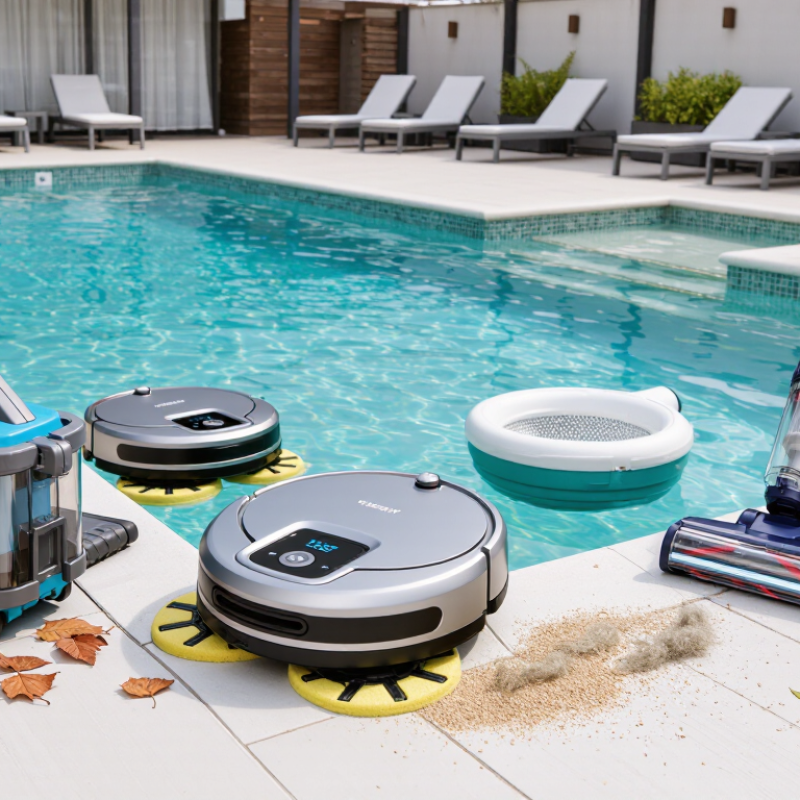
Battery-powered pool vacuums now fall into three practical groups: handheld, robotic, and hybrid surface cleaners. Handheld models use a telescopic pole and a small debris chamber. They suit steps, spas, and light leaf removal. Robotic vacuums move independently across the floor. Many include rotating brushes, fine filters, and waterline cleaning. Hybrid models combine floor suction with skimming functions, although their performance can vary.
The Pool & Hot Tub Alliance reports approximately 10.4 million residential pools in the United States. That large installed base supports demand for easier, cordless maintenance. Market analyses from Grand View Research also identify robotic pool cleaners as a growing equipment segment, driven by automation and reduced manual work. These reports do not prove every cordless model saves time. Battery charging, filter rinsing, and clogged impellers still affect real performance.
Choose by pool conditions, not appearance. A handheld vacuum may be enough for a small spa with sand on the floor. A robotic unit fits larger pools with frequent debris, but its battery capacity and navigation design matter. Lithium-ion batteries usually provide consistent power, yet capacity declines with age. Check actual runtime, charging time, filter volume, and replacement-part access. I would also test corner cleaning carefully. Marketing claims can look stronger than everyday results.
How to Choose the Right Pool Vacuum for Your Pool
2026 Top Battery Powered Pool Vacuum Types for Buyers
How to Choose the Right Pool Vacuum for Your Pool
Choosing a battery powered pool vacuum starts with your pool’s size, shape, and debris pattern. A compact handheld model suits small pools, steps, and shallow corners. It gives direct control. A cordless robotic cleaner works better for larger pools because it covers the floor with less supervision. For pools surrounded by trees, check the filter basket capacity. Emptying a small basket every ten minutes becomes frustrating.
Look closely at the pool surface. Smooth concrete, vinyl, and textured finishes may need different brush designs. A vacuum with strong suction can remove sand, but excessive force may drain its battery quickly. Check the rated runtime under real cleaning conditions, not only laboratory claims. Forty minutes may clean a small pool, yet larger pools often need a second cycle. I would also measure the pool before buying. Product descriptions sometimes make coverage sound broader than it is.
Charging and maintenance affect long-term value. Choose a sealed charging system and keep the charger away from splashing water. Rinse the filter after each use, especially after collecting fine dust. If your pool has a deep end, confirm the vacuum can reach it without losing suction. A telescopic pole can improve control, but it adds weight. I once underestimated that detail. The cleaner performed well, but my wrist tired before the pool was finished.
Safe Operation, Maintenance, and Battery Storage
For 2026 buyers, battery-powered pool vacuums commonly use lithium-ion or sealed lead-acid batteries. Lithium-ion models are lighter and easier to handle around steps and walls. Sealed lead-acid units can be heavier, but their weight may improve balance underwater. Choose a vacuum you can lift comfortably with one hand. Safety starts before immersion. Inspect the housing, filter, brush, and battery compartment for cracks. Never use a damaged vacuum or charge a wet battery. Keep the charger away from splashing water.
After every cleaning session, switch off the vacuum and remove the battery if the design allows it. Empty the debris chamber before organic matter begins to smell or harden. Rinse the filter with clean water, then let it dry fully. Do not use sharp tools on mesh screens. They can create tiny tears that reduce filtration. Check the lid seal and charging contacts for grit. A soft, dry cloth works better than aggressive cleaners. That detail is easy to miss.
Battery storage needs patience. Keep the battery in a cool, dry, ventilated place away from direct sunlight. Avoid garages that become extremely hot or freeze overnight. Do not store a rechargeable pack completely empty. The correct storage charge depends on battery chemistry, so follow the equipment manual. Never leave charging unattended for unusually long periods. My checklist is useful, but it is not perfect; I still forget filter rinsing after rushed cleanups. A visible reminder near the charging area can prevent that mistake.
The chart compares typical operating time for common battery-powered pool vacuum designs. Actual runtime varies with debris load, filter condition, water flow, battery age, and cleaning mode. For safe operation, inspect the battery and charger before use, keep charging equipment dry, clean the filter after each session, and store rechargeable batteries in a cool, dry place at the charge level recommended by the manufacturer.
